
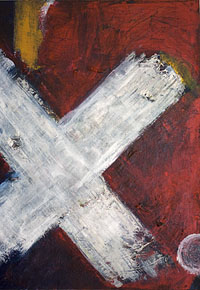
 Today I am struggling to come up with a coherent thought. When this happens one shouldn’t attempt to write a blog. It’s just a waste of time: Of my own time as I struggle (while I could do something more productive) and of my followers as there is nothing to be gained by reading a piece of ramblings. So I am giving it a miss and just putting up one of my paintings instead. This one is called No! Fullstop. It is a picture I really love for it’s texture and of course the reproduction as a digital image doesn’t do it justice.
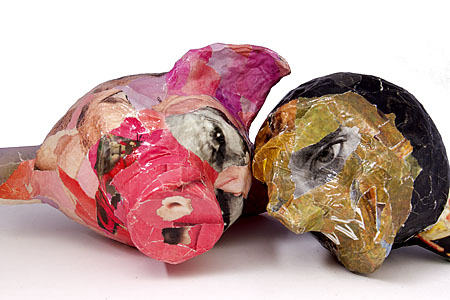
These two, Pig and Witch, were early puppets. (If I recall correctly, Witch was the third puppet I ever made). They are a reminder of how relationships change over time. These two were really good mates once, but now they can’t stand each other. I don’t know exactly what happened, but I suspect it is because Witch turned into a health freak and a teetotaler, while Pig likes his booze. Pig is now hanging out with Professor while Witch keeps more or less to herself.
I noticed the more puppets I make the more negative (in my opinion) traits they display. The first lot of fifteen, they were my friends. They have their little quirks, the ones you just reckon with in friends. Some of them I like more, others a little less, but they are all puppets I wouldn’t mind inviting round to my place.
The newer ones are more like acquaintances. I know them, but some of them have traits I totally dislike. The worst is, that I can easily come up with these now.
I have two more books planned for later this year, early next year. The next one will be of course about Puppy the love sick stalker (by the way, he has moved back into the house and he is starting to annoy me) and the following one will be about Hermit loosing his job. Pretty sure all the negative characters will find their place in this one.
I am currently working on a puppet called Push–Push. It is one that drives her own agenda, no matter what. Along the way she tramples all over the others. Yes, pretty sure you find her at the average workplace. And then I think, I really need to get started on Procrastinator as well.
Friends! Yes, tell me what constitutes a friend? Now this is a curly and very personal question. I don’t believe it can be answered comprehensively, not even by the most studied people. Last night, the question was brought up in conversation, and this here is another one of my unscientific and personal observations.
In German we have this word “Freund” which looks and sounds very much like the English word “friend”. These two words even have similar meanings and they could be mistaken as being the same. They are not.
In Germany you would only call a very clear and manageable amount of people “Freund.” Everybody else you’ve personally met is an acquaintance or a “friend of a friend”. I think when I left Germany I was down to two friends :).
Of course the Germans still use the two-tier of “you”. They have two terms: The close “Du” and the distant “Sie.” When you address somebody with “Du”, you are usually on a first name basis as well: you are friends. While “Sie” is usually used in combination with the surname. Oh it is all very complicated. To cut a long story short, the term used indicates the closeness of the people involved. The whole thing is a bit looser nowadays than it was when I lived there, but it is still there.
In New Zealand, (I don’t know how it is in other countries, as I have only lived in New Zealand long enough to have formed an opinion), virtually everybody you’ve met twice is your friend. Now this sounds very superficial, doesn’t it? It isn’t really.
For starters there is only one term to address the person opposite: “you.” This little fact tears down a lot of barriers.
Since I moved here the number of people I call friend has grown exponentially. But they all have one thing in common: I know them face-to-face. This fact keeps the number naturally manageable. My friends can drop in on me any time and have a conversation. What constitutes a conversation? (Don’t let me go there, not now… )
The word acquaintance is very rarely used here. I am not quite sure, but it seems if you use the word acquaintance, you have met the person, but don’t really have anything to do with them. I wrecked my brain, but I personally couldn’t come up with anybody I would refer to as an acquaintance here, though in German I would happily use the word for a number of people. I might refer to somebody as a “colleague from xyz” or “an artist guy I know”, or the “plumber who did my bathroom”. But acquaintance, no, I don’t have them in New Zealand.
Now bring on face book… I guess you can figure out my opinion. I’ll go and make a puppet in the meantime.
PS: You have certainly gathered my conversation was with a German :)
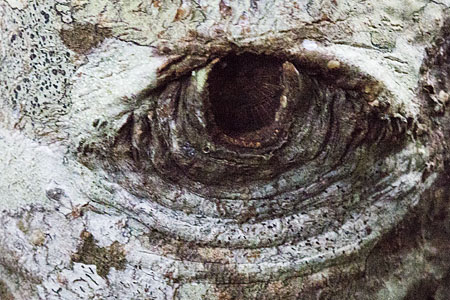
I have mentioned before on my blog that I am obsessed with eyes. Tree eyes fascinate me, even though I find them sometimes tricky to photograph. I have to think about the camera settings a little bit longer. But with so many other things, the dede puppets pretty much stopped my eye collection in its tracks.
When researching puppets you very quickly come across the name Peter Schumann. He founded the Bread and Puppet Theater in 1963 in New York and in the 70s moved to a farm in Vermont. There they still hold puppet events and workshops today (bread and puppets). A really interesting story.
I was amazed by Peter Schumann’s article “The Radicality of the Puppet Theatre” (reprinted in Schlechter, J (ed). Popular Theatre, Routledge 2003). Amongst other enlightening aspects, he points out the clear difference between actors and puppets. An actor tries to fake a character. He tries to become somebody he is not. Ergo an actor’s success is based on his capability to deceive the viewer. A puppet on the other hand is the character. It is what it is and the stories emerge from within the puppet.
It makes all perfect sense to me.

I have created twenty-six characters to date and so far have only one character I really dislike. This is Twoface. She looks straight at you and smiles. Superficially she looks like a pleasant enough person, very non-committal though. Her response to what you say is usually: “Ah, yes” or “Really” or “Indeed.” But you know exactly she doesn’t give a toss about anything. Even worse, when you turn her around, she has a second face rolling her eyes and it is very clear she believes everybody (except for herself) is a tosser.
I haven’t incorporated her in any stories yet, but I think she will become the boss. I will only use her if absolutely necessary.
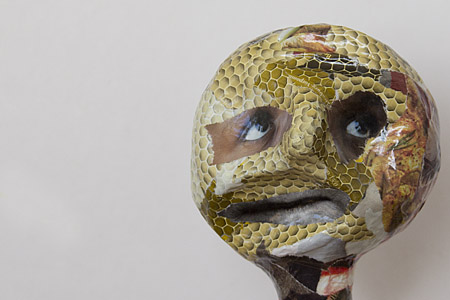 Now that I look at her second face and know that she is the boss, I feel slightly sorry for her. She must be in middle management and feels a bit of pressure from higher up. While she rolls her eyes, she does look a bit scared. But still I thoroughly dislike her behavior and I will stay clear of her as much as possible.

A friend of mine gave me a book of short stories by Paul Gallico to read. The one she wanted me to read in particular was Love of seven dolls. I wonder why?
No, seriously… I would not have understood the story entirely, had I not started making puppets myself.
The story was written in the early 1950’s and is set in France. It is about a puppeteer, called Captaine Coq, who saves a young girl from throwing herself into the Seine by letting the puppets talk to her. The girl and the puppets become good friends, but Captaine Coq himself is a real bastard. As the girl has nowhere to go, the puppets invite her to join the show. She interacts with the puppets naturally, and endures the treatment of the Captain. After the show becomes a success, the girl finds an admirer who wants to marry her. She is set to leave and the puppets are terribly sad, but Captaine Coq couldn’t give a toss. Only at the last minute is he able to express his own love for the girl.
In the reviews the girl is always the heroine, who saved the nasty puppeteer through her love for the puppets. If I hadn’t started puppet making, I would have seen it in exactly this way. But now that I know the spell hand puppets cast on their puppeteer, I know the puppets were the real heroes and ultimately Captain Coq saved himself by creating these puppets. The girl could have been replaced by another girl or another incident. But without the puppets, he would have lost touch with the real world entirely. He could not have escaped the shell he was in, a shell that was forced upon him by war.
The story tells us he had started making the puppets in a POW camp out of boredom and he started to entertain his fellow prisoners. Through his experiences in the war he had obviously lost his believe in the good in people. The war crippled him emotionally. A sarcastic bastard in real life, he could act out his caring and benevolent side through the puppets. In this way he could maintain a little flame of warmth.
Believe me, I have thought a lot about the crippling emotional effect of war. After all I am German… Emotional coldness is a black neck swan!
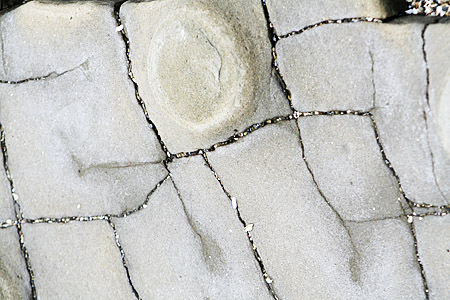 This image here I took six years ago. I like the juxtaposition of the lines with the round crater. For obvious reasons I originally called it “Square peg in a round hole.” It is just a close-up of some rocks we were climbing over at the time.
When I accidentally came across this image today, a totally different interpretation jumped out at me.
There is a little story to go with it: A friend of mine, a school teacher, was once asked by one of her pupils: “Tell me Miss, what was the world like when it was still black and white?” I just love this story. The pupil was of course referring to black & white photography and TV. When I first heard the story, I thought it was so cute I laughed. Today, my answer would be: “The world was more colourful then…” as there must have been so much more room for imagination.
 Today, when I glanced at the photograph, I instantly saw a smiling face with a rock hurled at it from a giant fist. When I showed my discovery to a friend, he couldn’t quite follow. So I coloured it in for him in Photoshop. Now the image is called: “Honestly, I didn’t see this coming!”
 However this is a very disturbing interpretation, and I went looking for another image. It took me a while, but this time it is called: “Life is beautiful!” It shows two playful figures in the sun.
Thank God you always remember what you saw last. I have difficulties seeing the giant fist now when I look at the black and white original.

Everything around me is in flux at the moment. I am not a rock, I am a pebble.
Rocks brave the tide. They are strong and stand their position. But over time they will be ground down.
Pebbles on the other hand are small fries. They might get uplifted and swirled around, yet it is very reassuring they will settle again. A few inches to one side maybe, but there is always a chance it will be in an even sunnier spot.
For now I am happy it’s Friday again.
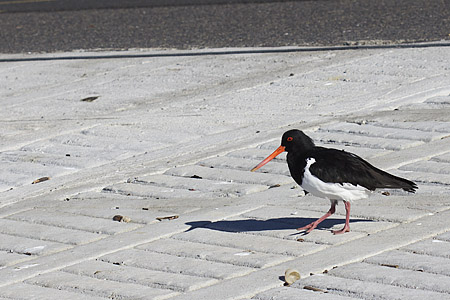
This is a bit of false advertising! I am currently trying to tie up so many loose ends. For the first time I sat down this morning and didn’t know what to write about. I have to meet somebody relatively early this morning and am therefore under some time constraint. I looked through the images I have taken recently and found this lost looking oyster catcher. The only thing to pick on this bare ramp is a plastic bottle cap.
I’ve just finished this little book called “Modern Puppetry” by a guy called A.R. Philpott. He was obviously a very famous puppeteer in his time, known as Pantopuk the Puppet Man. The book is mainly on puppet making, but touches on performing and the current state of puppetry in general. Current in this case means 1966, as this was when the book was written. I am surprised how much puppetry still seemed to have been part of society then. But I suspect in the meantime I am just living at the wrong end of the world for puppetry.
One sentence in the book really touched me. He talks about finding material for your puppet show, he says: “Once you need them – that is as soon as you start being a puppeteer – ideas will come, a part of your mind being always alert for new possibilities – and not only for puppet characters but also for situations in which these can find themselves on stage. Plots and plays are inseparable from characters.” [p40].
Phew, so I am normal!

Yesterday I told someone a very personal story: it is one of my favorite ones, a brief summary on how I came to form my perspective. I thought I would share the story with everybody:
The pride of my hometown is a huge palace with beautifully maintained gardens. When I was a child, one of the main attractions in these gardens was a couple of swans. It was a big deal when the swans laid their eggs in spring and I wouldn’t be surprised if even the newspaper reported when the young ones hatched. Exciting stuff! However, what totally eluded me was that these swans were black-neck swans, a species native to South-America and very rare in Germany. For me they were simply the only swans I knew, so I just assumed every swan has a black neck.
When I got my first job, I moved away from my hometown. One day I went to the shores of a lake with a friend. And there they were, the beautiful white swans. White from beak to tail feather. I exclaimed: “They don’t have black necks.” My friend laughed at me and said: “Don’t be silly, swans are always white. They don’t have black necks!”
Then I moved to New Zealand and… the first swan I saw was black, entirely black. I can’t remember when I last saw a white one. I wish I still had my friend’s phone number :)


 dedepuppets